
A failed part
A vent boot, short flashing section or bounded shingle area can have a local repair when its surrounding layers remain sound.
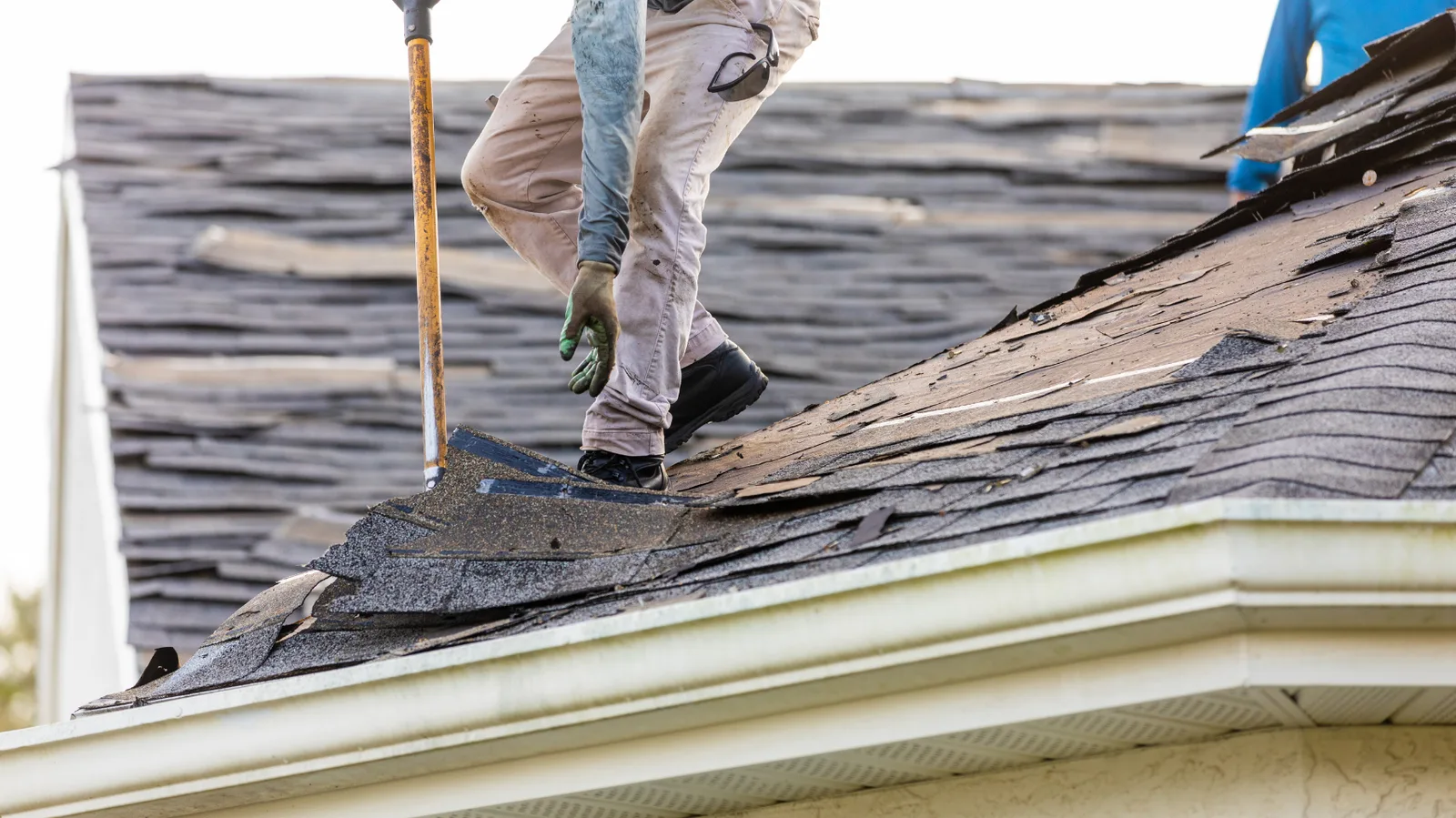
A drip beside a wall does not tell the whole story. Water can enter higher on the roof and follow the underside of the decking before it reaches the room. We trace that path and inspect the roofing details around it. A cracked pipe collar, loose wall flashing and a damaged shingle section call for different repairs.
Free roof inspections. Clear repair and replacement options.
At a pipe, the collar seals around the penetration while its base sheds water into the surrounding roofing. At a wall, step flashing between shingle courses and counterflashing above it have different jobs. A surface patch over a loose connection leaves the underlying opening unresolved.
Repair can involve replacing the failed part, lifting enough covering to rebuild its laps and replacing damaged underlayment or decking below. The work needs a sound place to end.
Adjoining shingles need to lift without breaking, replacement material needs to fit the system, and the deck and flashing need sound connections. Brittle covering, concealed decay or layers of old patching widen the work. Local replacement, a larger slope repair and full replacement are different scopes. We explain the affected area before turning a leak into a whole-roof decision.
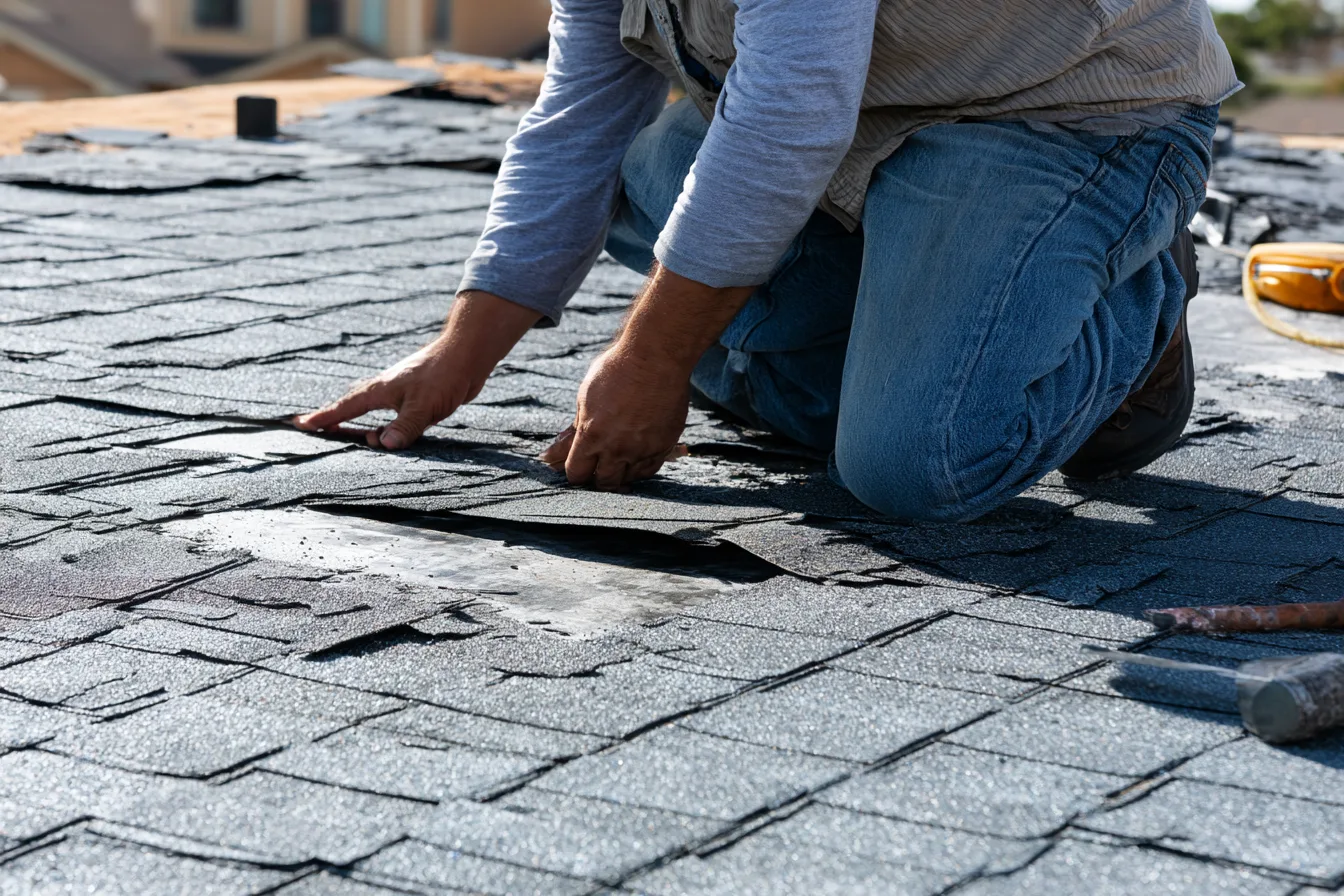
The size of the visible mark indoors does not establish the size of the roof repair.
A vent boot, short flashing section or bounded shingle area can have a local repair when its surrounding layers remain sound.
Damaged wood, brittle adjoining shingles or several overlapping patches require more material to be opened and rebuilt.
If deterioration extends across a slope or several sections no longer support sound repair, compare the larger repair with replacement. The roof walk helps establish that boundary.
Repair or replacement guidanceWe begin with the room, timing and roof detail near the likely water path. What you noticed gives the inspection a starting point.
The covering, adjoining material, underlayment and decking determine where sound work can connect.
Failed materials are repaired or replaced and their laps, flashing and fastening are rebuilt for the system.
Access, slope, dismantling around walls or chimneys, replacement-material availability and hidden wood affect the work. A small visible opening can require considerable labor if surrounding layers have to come apart and be rebuilt.
A repeat leak calls for another look at the water path and repair boundary. Repeating the same surface patch does not explain why water is returning.
Learn about leak tracing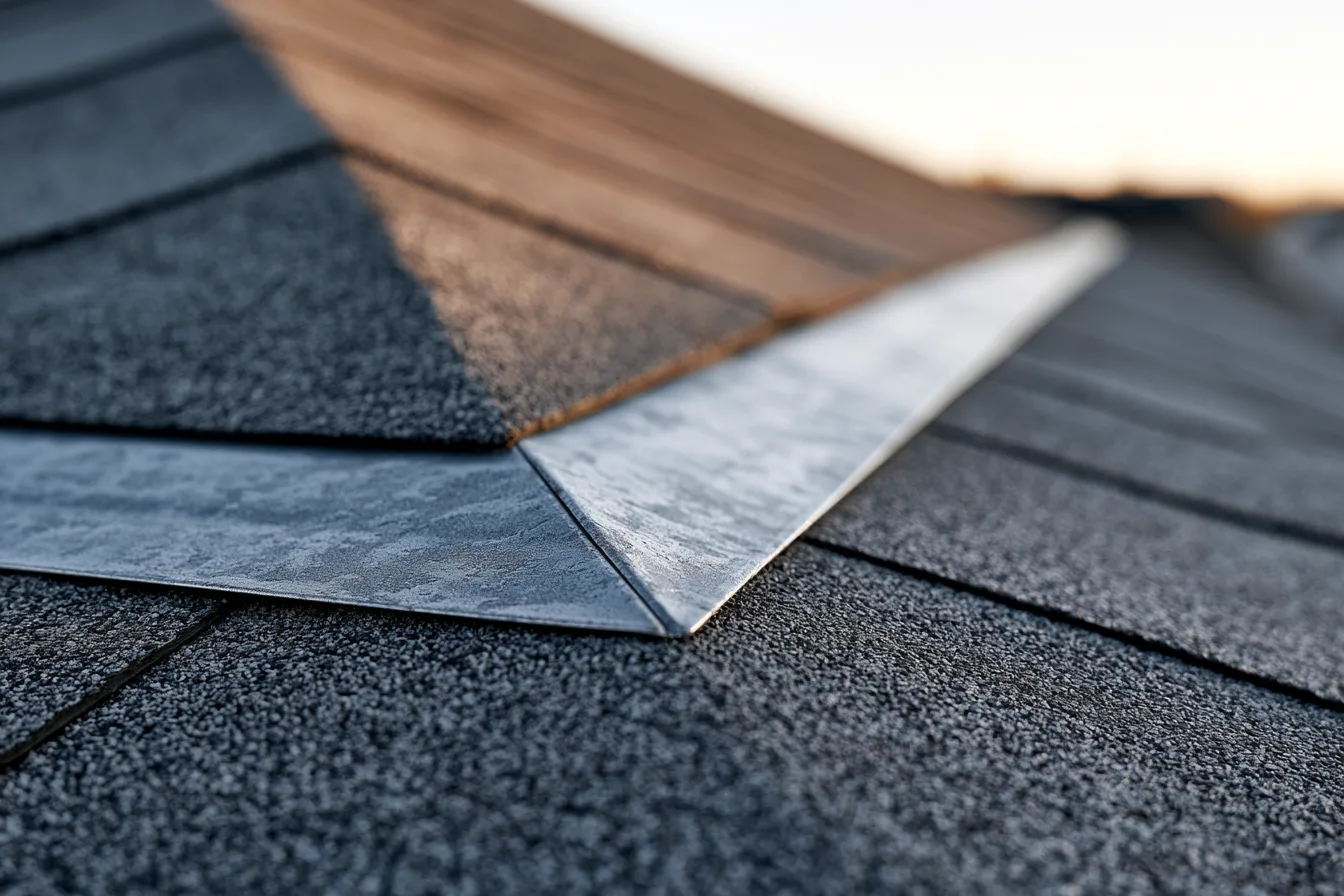
Sealant can be part of a specified detail, but it does not replace missing metal, a broken lap or an unstable connection. The failed joint needs to be understood before choosing the repair.
Yes, if the affected area has workable adjoining material and sound connections. Age is context; the current condition and repair boundary decide the useful options.
Call and say water is entering. Keep away from wet electrical fixtures and sagging ceilings, and stay off the roof. Temporary protection and permanent repair are separate parts of the discussion.

Tell us the room and roughly when it started. Request a free roof inspection so the repair can begin at the roof opening.
(816) 330-2235